
Why Olive Leaf
Nature’s quiet pharmacy
Olive leaves are one of the most concentrated polyphenol sources you can drink. Here’s the data, and what it means for your cup.
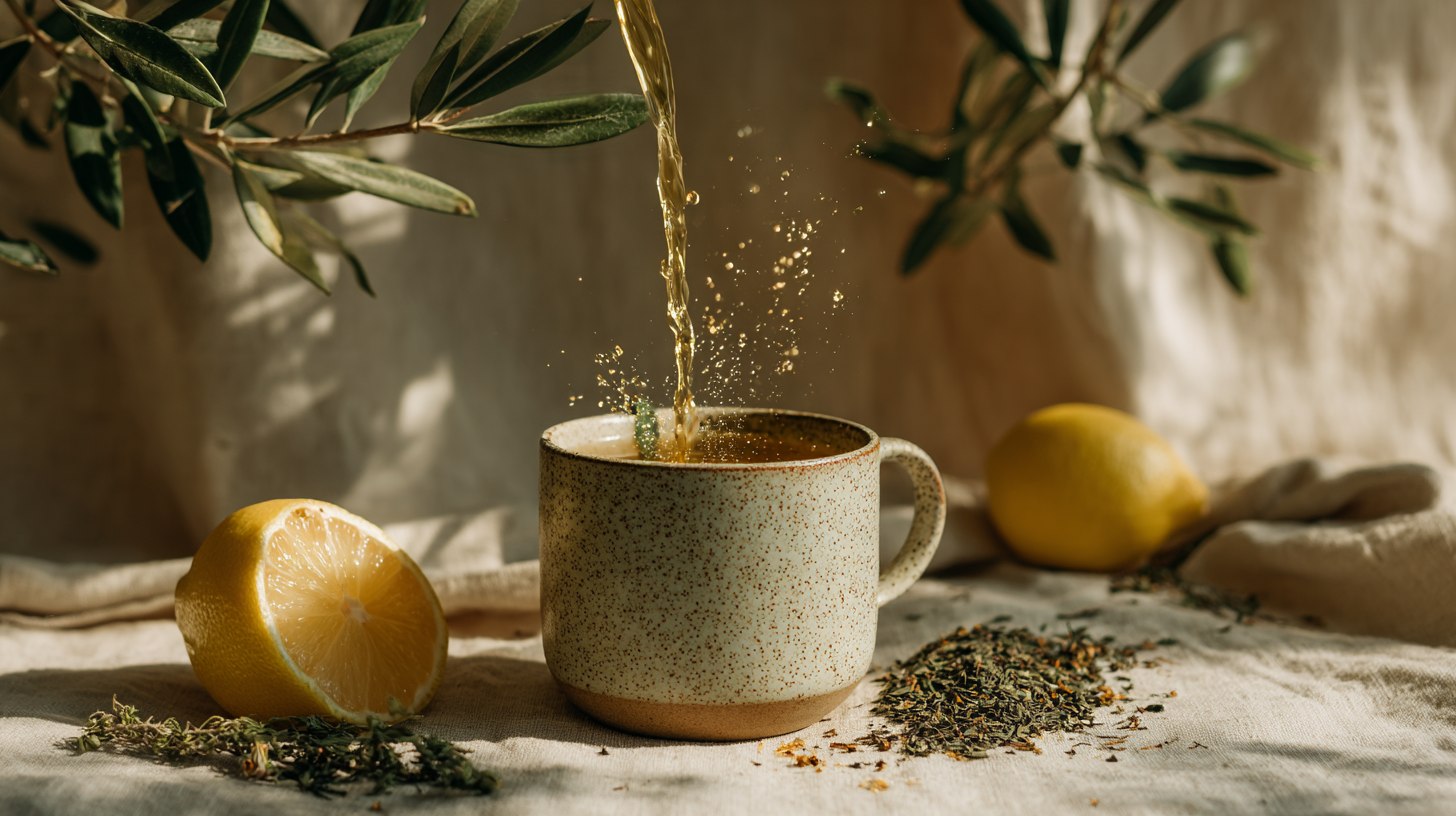
Whole olive leaf: the part of the tree most people ignore.
For thousands of years, cultures across the Mediterranean have brewed olive leaves for their natural benefits. The Greeks chewed them. The Egyptians wrapped them around mummies. We just steep them in hot water. The leaf has always been the quiet hero of the olive tree. And modern testing finally caught up to what people have known for generations.
Polyphenols are naturally occurring compounds found in plants, widely recognized for their antioxidant properties. They’re what’s called a functional ingredient: not a vitamin, not a mineral, but a class of plant chemistry that supports the body in the way real food has always supported the body. (Less “wellness shot,” more “great-grandmother knew.”)
How it stacks up
This is the part most people don’t expect. Olive leaves are one of nature’s richest sources of polyphenols, with batches that have tested above the rest of the wellness aisle by a wide margin. Premium olive oil clocks in at a few hundred milligrams per kilogram. Green tea, often celebrated as a polyphenol champion, sits in the tens of thousands. Olive leaf tea, in independently tested batches, has reached well above any of them.
Polyphenols, mg/kg
One of the most polyphenol-rich brews you can pour. Naturally variable. Honestly tested.
Why the leaf, not the oil
Olive oil is pressed from the fruit. Olive leaf tea is the leaf itself: whole, dried, brewed. The fruit gets most of the attention; the leaf carries most of the chemistry. When you brew the leaf, you’re drinking the part of the tree that protects the fruit, season after season, without any of the fat or calories of the oil.
And there’s a shelf-life problem with oil. Its polyphenols dissipate over time, dropping steadily from the day the bottle is pressed. Dried olive leaf, stored properly, holds its polyphenols far longer.
What’s actually in there
Five named phenolic compounds get most of the credit: oleuropein, hydroxytyrosol, tyrosol, oleocanthal, and a family of flavonoids. Oleuropein is the heavyweight: it’s the bitter compound that gives olive leaf its character, and it’s been the subject of ongoing nutritional research for decades.
We don’t add anything. No fillers. No blends. Just the whole leaf, dried gently, packed in a resealable pouch. What you brew is what came off the tree.
How to drink it
Brew it, sip it hot or enjoy it cold. Twice a day, every day, is how our family has done it for over four generations. The flavor is bold, herbal, faintly bitter. The same way real green tea is bitter. That’s the polyphenols saying hello.
Leaf & Heir olive leaf tea is a beverage, not a supplement. Polyphenols are naturally occurring plant compounds. Levels may vary by harvest, processing, and storage. Comparison ranges are typical published values. Not intended to diagnose, treat, cure, or prevent any disease.